Is Sexuality Set in Stone?
It's not a simple question to answer. Is sexuality set in stone? At face value, it certainly feels like it is. But that's not exactly what the science tells us. I want to try and tackle the question of sexuality and neuroplasticity. But to start to answer this question, I need to lay the groundwork.
Brain vs. Mind
First, it's important to understand that the mind and the brain are not the same thing. The brain is the hardware. You can touch it, weigh it, scan it, operate on it, damage it, or measure its electrical/chemical activity. It is the physical organ that sits in the skull made up of billions of neurons. But the mind is different.
The mind is the collection of subjective experiences, thoughts, feelings, memories, intentions, awareness, and sense of self that arise from the brain. You can't physically touch, weigh, or scan it. It's what it feels like to be you. It is your consciousness. It is how you experience life.
This distinction is important when trying to answer this question. One is the hardware, the other is the software. And both play a role in how sexuality develops.
But for now, I just want to focus on the hardware part: the brain and its amazing ability to reorganize itself. We call this neuroplasticity. It is the brain's lifelong ability to change and adapt — both structurally and functionally — in response to experience, learning, injury, or environmental demands. In simple terms: your brain is not fixed; it can rewire itself throughout life.
We know this intuitively. For example, learning to ride a bike requires the brain to learn new things. At first, you might feel wobbly and your body doesn't know what to do. But over time and with some practice, the brain forms new connections. And riding a bike eventually becomes second nature. Practice literally reshapes the neural pathways in the brain to make the task of riding a bike easier and more automatic.
Now, how does this relate to sexuality? And what can we learn from how the brain operates?
Sexuality & Neuroplasticity
I would say that sexuality – whether homosexuality or heterosexuality – follows a typical course of development. Namely, it happens gradually. Subtle attractions often appear in late childhood to early adolescence and become more noticeable during puberty as hormones intensify feelings, fantasies, and awareness. This might prompt questioning or exploration. And by late adolescence to young adulthood, most people land on a sexual identity that aligns with their experiences.
Throughout that process, the brain has been making neural pathways and reinforcing them through experience. Simultaneously, the hardware is both being built and coming online.
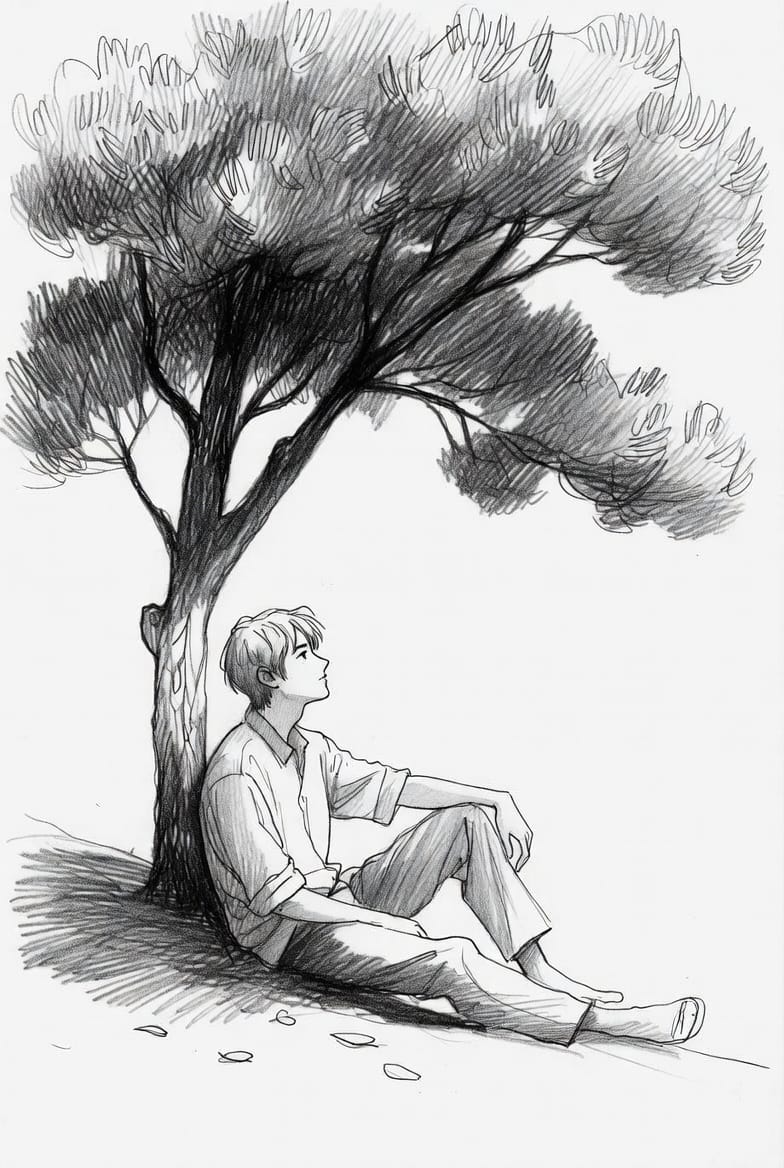
To illustrate this concept, I think of the brain as a tree. It is shaped by our life experiences. And adverse experiences, like trauma, are like rocky ground – a tough spot for a budding sapling. Regardless of where it's planted, the tree will do its best to grow. But sometimes rough terrain can lead to stunted or unwanted growth. And so it adapts. New roots and branches emerge to steady itself. And those become reinforced by repeated thoughts and behaviors. It might seem like the tree was destined to grow this way, but in reality, the tree is just doing the best to grow where it's planted.
Dr. Godfrey explains this concept in a Strong Support interview. In the clip, he doesn't explicitly use the term 'neuroplasticity', but that is exactly what he's describing.
Dr. Floyd Godfrey on Neuroplasticity and Sexuality; Source: Strong Support
So, How Does Change Happen?
From a neuroscience perspective, if I was trying to overcome unwanted same-sex attraction, there are at least 3 things I'd need to do:
- Continuing with the tree metaphor, I would first need to address that rocky ground that gave rise to the development of same-sex attraction. More often than not, this means working through past traumas/attachment wounds. That rocky ground needs to be remediated otherwise the roots will continue to search for nourishment. This also means fertilizing the ground around the tree – i.e., finding healthy ways to get my same-sex emotional needs met.
- Second, I would need to prune the unwanted branches. In other words, I would need to stop feeding the homosexual thoughts, feelings, and behaviors. No more LGBT+ movies, no more gay pornography etc. The branches will begin to wither as they no longer get used. They'll begin to atrophy.
- And finally, I'd want to foster and encourage new growth, new branches. That means making meaningful relationships with those of the opposite sex. For me, it means trying to date women. Just as a tree needs sunlight and water to grow, the brain needs stimulation and healthy experiences to develop properly.
Of course, this is all easier said than done. And it goes without saying that this is an iterative process. My journey certainly has been. I am constantly revisiting these steps.
It's also important to keep in mind that it likely took years for the tree to get to this point, years of reinforced patterns and connections. It makes sense that it will likewise take time for those patterns to fall by the wayside and new ones to grow. But it doesn't mean it's not possible. Sometimes we just have to be patient with ourselves.
So is sexuality set in stone? No. I don't think it is. The brain has an amazing capacity to wire and rewire itself. We know the hardware can change over time. It takes a sustained effort. And if the hardware changes, it makes sense that the software will follow suit. In other words, if the brain changes, we can expect that the mind will as well. It's not an easy path. No one can force you on it. Only you can decide.
You are the gardener.
Member discussion