The Love I Never Got
I came across a clip I wanted to share because it resonated with me. It's a one-minute clip of an interview with Dr. Gabor Maté, a renowned trauma expert¹.
He shares a profound truth about relationships I've noticed in myself and others.
Source: We Need to Talk | Paul C. Brunson
Maté: You always marry somebody that's going to trigger for you every unhappiness that you ever had in your childhood. So when we find someone to be in a relationship with, it happens on two levels. One level is... I find them attractive. They're humorous. They're fun to be with. Underneath it, there's a looking for the love that we never got in the first place. So relationship is very much a matter of growing up together, if that can happen. I guarantee you when you marry somebody, you're going to find both your dreams and your worst nightmare.
Interviewer: That's profound. That we are all seeking...subconsciously we're seeking our parents' dysfunction.
Maté: Yeah, because that's where we wanted the love.
In the clip, Maté argues that people subconsciously choose partners to seek unmet parental love. And in the process, they also trigger the unhappiness they experienced in childhood. So on the one hand, such a relationship fills that unmet need. But on the other, that relationship can also bring up old wounds.
I don't think he's wrong. More often than not, we fail to recognize how our past has influenced us. Maté's insight draws from attachment theory and is supported by studies that highlight how insecure attachments rooted in childhood can perpetuate similar dynamics in adult relationships².
I don't mean for this to sound deterministic, our choices are our own. But perhaps this insight helps explain part of the why behind our attractions.
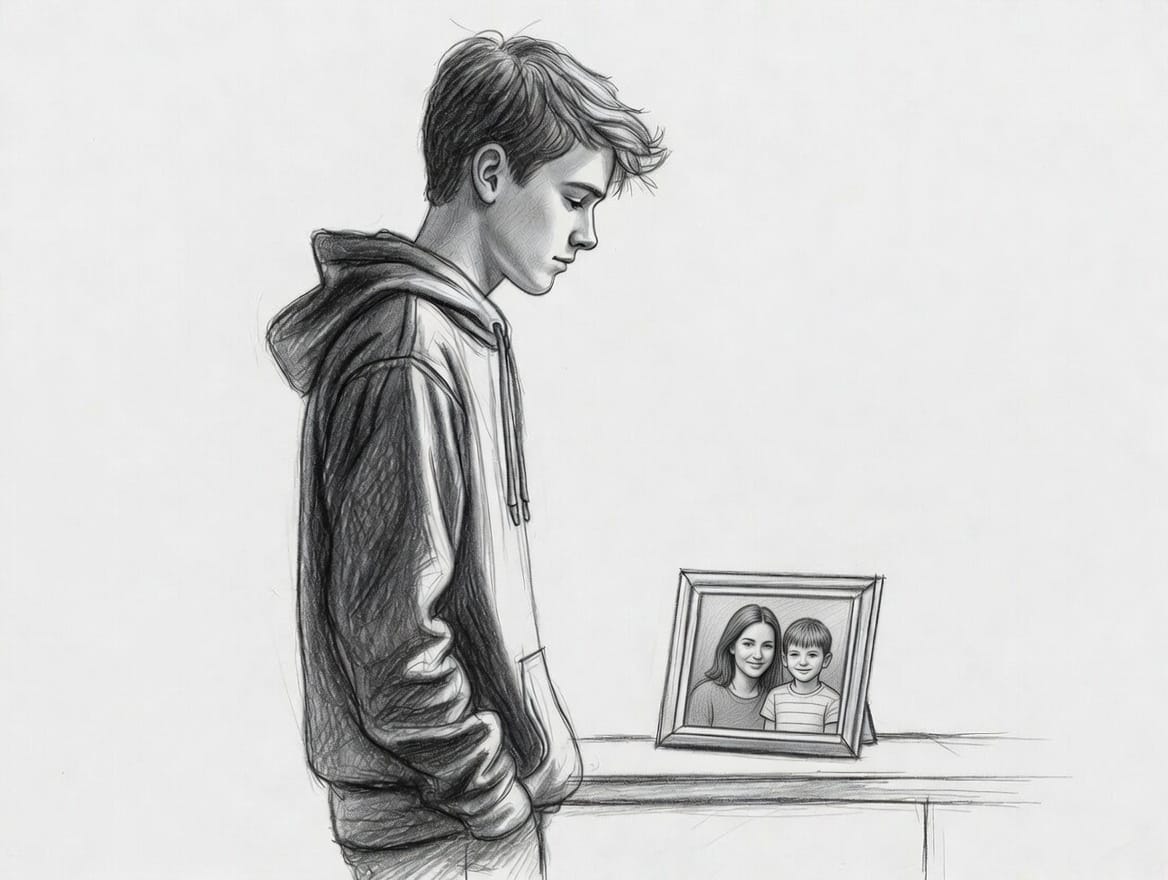
And while I don't think he's talking about same-sex attraction, his insight is also consistent with my own experience.
I didn't feel like I was loved by father. I didn't have any brothers. I was bullied in school by other male peers. The male friends I did have, seemed to fall away. In hindsight, I'm not sure I ever got the healthy male attention or affection that I wanted so badly when I was young.
I still carry that pain with me. And it's influenced in many ways who I've become.
I'm not the only one either. I think about the other men with similar stories and it's not hard to see how we've ended up here. We take our feelings at face value without recognizing what might be driving them.
I mean there's a whole subculture within the gay community where younger men hook up with older ones (i.e., daddy). I don't think it's just some innocuous fetish. There's a reason why we see this play out. It's men, who still carry that wounded boy inside, trying to win their father's love.
We seek what we never got. And too often we look for it in the wrong places. Gay relationships might feel like they satisfy unmet needs, but they are a temporary substitute that requires more novelty and intensity to numb the pain. In doing so, that early childhood unhappiness not only gets triggered, but it gets aggravated. And in that sense, our worst nightmare really is realized.
It's why I think gay relationships are inherently unstable and short-lived. It's not about sex, it's about the underlying emotional connection with other men. It's about learning new ways to connect with others. It's about healing childhood wounds. It's about feeling like a man among men³.
It takes self-awareness to recognize this cycle. And it takes time to begin to break free from it. Last week, I wrote about neuroplasticity. That's the good news here. We're not just a victim of our circumstances. With a sustained level of effort, it's possible to create the life you want.
That is my hope. And sometimes it's nice to be reminded of that.
1) Brunson, P. C. (Host). (2024, October 21). Gabor Maté: Your partner choice reveals everything! The hidden cost of ignoring trauma [Audio podcast episode]. In We need to talk with Paul C. Brunson. Spotify.
2) Kane, H. S., Jaremka, L. M., Guichard, A. C., Ford, M. B., Collins, N. L., & Feeney, B. C. (2007). Feeling supported and feeling satisfied: How one partner's attachment style predicts the other partner's relationship experiences. Journal of Social and Personal Relationships, 24(4), 535–555. https://doi.org/10.1177/0265407507079245
3) My therapist used to say this to me all the time.
Member discussion