A Number to Start From
I spent a lot of time trying to figure out what was going on with me. Reading, thinking, praying, and guessing. Mostly guessing.
Somewhere along the way it clicked with me that I could try and measure my own experience. If I could measure it, then I'd have something to compare to. And instead of spinning my wheels, I'd have a baseline which I could work from.
In my writings, I've touched on a lot of mental health themes such as trauma (adverse childhood experiences), attachment, OCD, loneliness, etc. There are assessments for all of these things.
I've been trying to brainstorm how this newsletter might provide more value to its readers. It occurred to me that instead of writing about these things abstractly, I could just compile the tools for you.
And so that's what I'm doing.
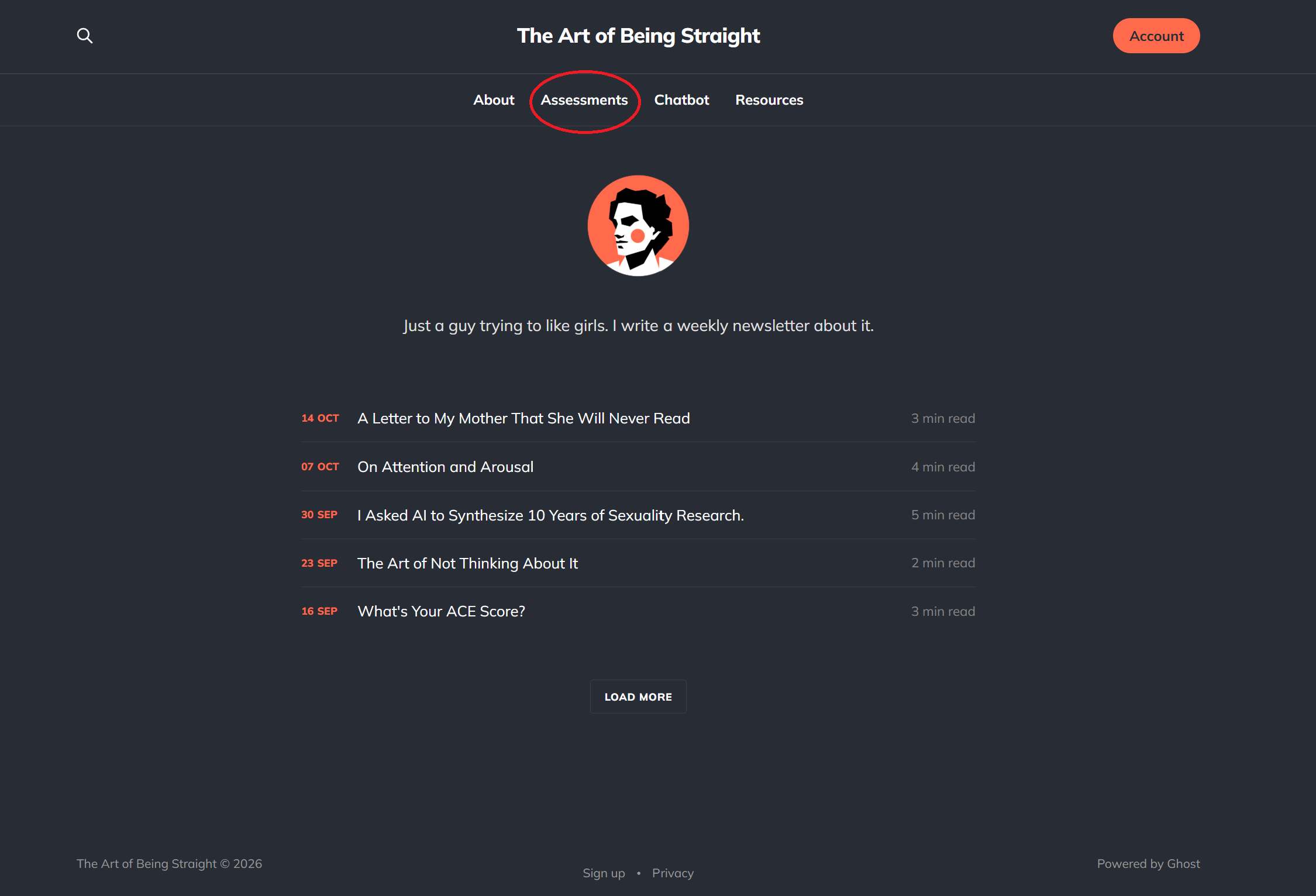
I've created a new page on the site. It's called Assessments.
The questionnaires listed there would've given me a clearer picture about my life had I known about them earlier. About how I grew up. How anxious I actually am. How obsessive my mind gets.
I'm hoping that they can help you along in your journey.
What They Do
Keep in mind, none of these assessments were built for this specifically – addressing unwanted same-sex attraction. They were designed for the general population. But I think that's part of why they're useful — they measure the ground, not the thing growing in it.
And the ground is where a lot of this starts. For example, people with same-sex attraction report consistently higher rates of childhood adversity and OCD – many also struggle with attachment wounds that show up in how they handle relationships.
These assessments are just a number to start from. They might point to areas of your life where you're struggling. And that's ok. Much of this newsletter is about understanding yourself. And the assessments are just another tool to do so.
What They Don't Do
These assessments don't give you the answers. They won't tell you who you are or what to do. But they might help paint a picture of where you're at.
I'd caution against taking the results to heart. They're not meant to diagnose — they're screening tools used in research, and no tool is going to capture your experience. So don't take them and run with them. They're not meant to label your experience, only inform it.
Just take them with a grain of salt. If they're helpful, great. If not, that's ok too. I will include my own answers in the assessment and/or links to posts I've written to help give more context.
Final Thoughts
I didn't make up these questionnaires. They're published in research and used as screening tools. And they're all free. I'll cite the sources on each page. Three are up so far. The rest are coming over the next few weeks — I'll announce each one as it lands.
Nothing is saved on the site. No account, no login, no database, no cookies. I never see your answers. Take an assessment, get your number, close the tab. Done.
It's what you do with that number that matters.
Give it a try. You can find them all here. If you take an assessment that resonates with you, tell me what it was like. I read everything. And if there's something you want measured that isn't here, say so — I'll keep adding.
Member discussion