Why I Still Go to Church
Today's newsletter is a little different. But I don't typically share how my faith impacts my struggles. I don't know why. Maybe I'm just not comfortable sharing or maybe it feels too vulnerable.
But I got a question from a reader several weeks ago that I think resonates with many of us. It relates to church and unwanted same-sex attraction.
Please consider writing an article on church hurt or how churches can approach the unwanted SSA subject (two different topics but they are certainly linked).
I want to address the first part – namely church hurt. I'll also share thoughts on how churches can support those struggling with their sexuality.
Many religions and faiths teach that marriage is meant for a man and a woman. And that same-sex relationships are incompatible with God's plan for us. For obvious reasons, this creates a rift for many of us who try to live according to our faith, but also struggle with our sexuality.
If you're like me, you've probably had countless experiences of people saying insensitive things at church or feeling deeply lonely in an environment that encourages traditional family values. I know the pain that comes from sitting there alone, looking around, and wondering if I belong. For a while, I didn't feel like I did. I spent many years going to church. And I've also spent many years not going.
But I've had spiritual experiences that have made it challenging to completely abandon my own beliefs. And it's as if I'm tethered, wandering trying to make sense of things, but always coming back.
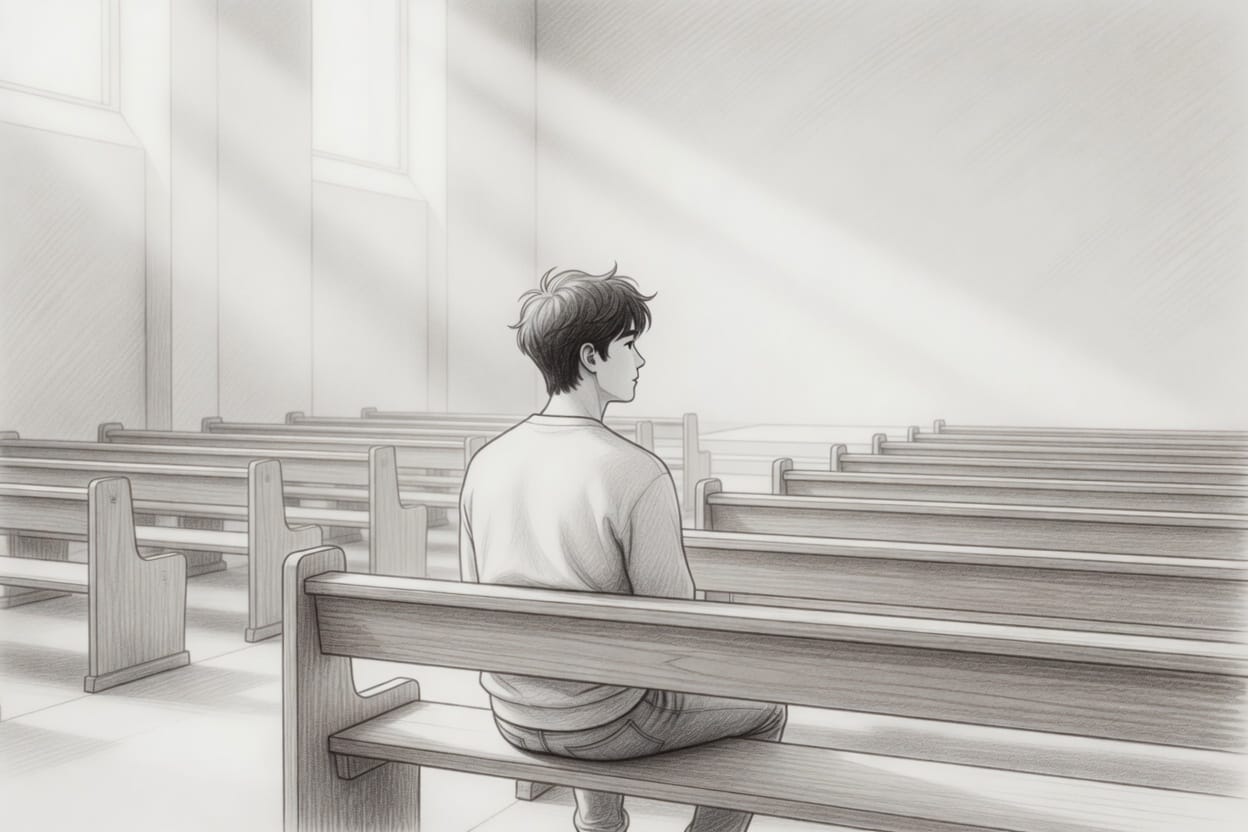
Church hurt is real – especially for those of us who don't feel like we belong. But here are a few reasons why I keep coming back.
Purpose: Focus on the why. I try to keep my attention riveted on why I'm there. For me, that means going to church to worship my Savior, Jesus Christ. I don't go for the social aspect. I don't care if I have friends there. I go for Him. I know He wants me there, even if I don't want to be there. He wants me to draw closer to Him. In doing so, He can change my heart. Focusing on that purpose — focusing on Him – gives me the capacity to stomach the heartache that comes from unfulfilled wishes.
Community: Friends make things easier. As I've continued on my own journey, I've let in some people along the way. That they know my struggle and still support me is a source of strength. I've always been more of an individualist than a collectivist and always struggle with the idea of 'community.' However, as I'm getting older, I'm learning that we need each other. And church provides a medium for people with similar beliefs to come together and support each other. Sometimes I'm the one that needs help – though I don't like to admit it. And sometimes I'm able to help other people. When I feel turned off by the idea of church, it's helpful for me to focus on others, not myself. I don't focus on the pain I sometimes feel. I focus on helping others who might also be hurting.
Perspective: In some ways, I don't think what I struggle with is any different than others' struggles. We all have things we struggle with. The Christian view suggests that Jesus Christ is able to help everyone, regardless of their challenges. His grace is sufficient. And if that's the case, then really there's no need to get special treatment – because He's done all the hard work. There's no need to feel down about myself, ashamed or embarrassed. He can save me AND everyone else who needs saving. It's tempting to think that the church should accommodate my circumstances. But the reality is that I go to church so that I can be changed. Not so the church will change. It's not always comfortable, but there's no growth without discomfort.
This sort of addresses the second part of the question – how churches can support those grappling with unwanted same-sex attraction.
I believe religion should cultivate a humility and reliance on God. For me, this means relying on Jesus Christ – even if I don't have all the answers. And one of those answers I don't have is how churches can approach the subject of unwanted SSA.
I do have a few thoughts though. Many churches do not take a position on the etiology of same-sex attraction – when I was younger, I was left frustrated by the lack of answers. The only thing church seemed to offer was prayer. And for me – as sacrilegious as it may sound – prayer wasn't good enough. I needed something more concrete. That desire led me on a long journey, one that required me to learn about myself.
In hindsight, I wouldn't have it any other way. My faith provided the guardrails, while I searched for answers. I think church hurt can stem from at least three things: 1) not feeling like I belong, 2) not having any answers – nothing tangible to address or progress towards, and 3) well-intentioned but perhaps insensitive people. Supporting those with unwanted same-sex attraction in my mind would require a cultural shift in many of our religions – not a doctrinal one. If people understood more about same-sex attraction, it wouldn't be so taboo to address. And greater understanding would help people more easily show compassion. I'm not sure how this happens. But maybe it starts slowly, just one person at a time.
I used to go to church because it was an expectation. When I got older, my own pain and confusion kept me from going. At the time, I wanted to believe God loved me. But I didn't feel it. (Perhaps because I hadn't felt unconditional love in my own childhood). Or maybe because I didn't love myself. But nowadays, I go to church because I'm focused on why I go – to follow Jesus Christ and to help others. Most of the time, I still don't like going. But I always feel better when I do, even if my struggles don't go away immediately.
A few more related thoughts here:
 TAOBS
TAOBS
Member discussion