I Have Friends
Most of my week is work, come home, walk the dog, and repeat.
I have friends. I talk to them sometimes, but I don't always feel like they really know me. Or maybe I just don't let them get that close. Either way, I know it's a problem.
There's a difference between having company and having connection. I can do the former. The latter is harder for me.
I do have moments, though, where I get carried away in conversation — excited enough that I share a bit more about myself than I usually do. It sort of happens by accident. But it's invigorating when that excitement is reciprocated, and I walk away feeling good about myself.
It's sad. Most people probably don't think about connection so mechanistically. I'm just trying to figure out how to replicate those moments. I know I need more of them.
I added a loneliness scale on the site this week. Predictably, I scored rather high — 60 out of 80. Not surprising, I suppose. Everyone experiences loneliness to some extent, whatever their sexuality. But people with same-sex attraction report it at higher rates than everyone else¹.
I don't know why that is.
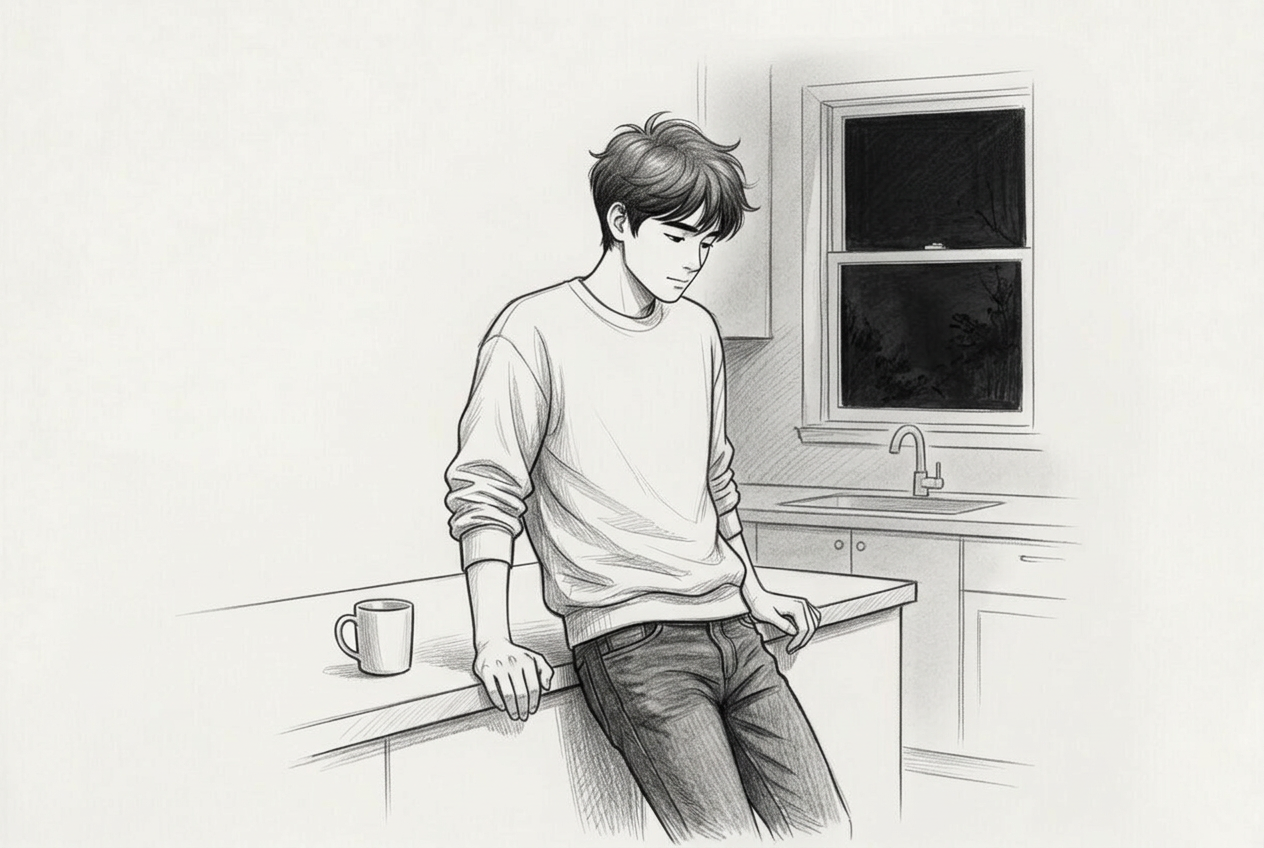
Stigma is the usual explanation, and stigma is real. But I think it's more than that. It's a loop. Feeling hurt or exposed makes you withdraw. Withdrawing makes you lonelier. And the lonelier you get, the easier it is to fantasize about connection. But because no one can know, the mask stays up. And the cycle deepens.
Sometimes the people who look happiest are the ones hurting most. Like an overcompensation for the pain inside. I know it well.
But nowadays I'm more interested in feeling seen than looking the part. The assessment is one way to gauge how you see yourself — twenty questions, a few minutes. Free, and nothing is saved.
It's revealing, and I know I have a long ways to go.
You can try it here: Loneliness (UCLA-3)
1) In a 2022 CDC survey of 26 states, 41 percent of adults who identified as gay and 57 percent who identified as bisexual met the survey's threshold for loneliness, against 30 percent of those who identified as straight.
Bruss, K. V., Seth, P., & Zhao, G. (2024). Loneliness, lack of social and emotional support, and mental health issues — United States, 2022. MMWR. Morbidity and Mortality Weekly Report, 73(24), 539–545. https://doi.org/10.15585/mmwr.mm7324a1
Member discussion