You Can See It in Their Eyes
Most all of the gay men I know seem to carry a deep sadness within them. You can see it in their eyes. I recognize it because that used to be me.
As I've looked into this more, I came across a study that supports this observation. A systematic review published last year in Frontiers in Psychiatry, pulls together 123 high-quality studies from 31 countries and more than a quarter-billion participants¹. The findings are clear: people who identify as LGBTIQ+ experience mood and anxiety disorders at rates many times higher than the general population.
Here are the numbers from the research:
- Depressive disorders: 35.3% (compared to just 3.8% in the general population)
- Bipolar disorders: 5.6% (versus 0.5%)
- Anxiety disorders: 34.3% (versus 4.1%)
That’s roughly one in three people in the LGBTIQ+ community meeting formal diagnostic criteria for depression or an anxiety disorder. The pattern appears to hold across gay men, lesbians, bisexuals, and other subgroups, with rates elevated from North America to Asia. The study only uses peer-reviewed work and appears to be careful and rigorous. But what explains these findings?
The Mainstream Explanation: Minority Stress
The authors, like most researchers in this field, lean heavily on the well-known 'minority stress' model. They point to discrimination, family rejection, bullying, societal stigma, and the daily burden of living in a world that isn’t always affirming. The idea is that these external pressures create chronic stress that shows up as depression, anxiety, and other mental health struggles.
It’s the explanation you’ll hear repeated in almost every mainstream psychology journal, LGBTIQ+ advocacy group, and university. Prejudice and rejection are real and painful for many people who experience same-sex attraction (SSA). No one should minimize that.
But here’s where the story falls short.
An Alternative Explanation
What this study (and so many others like it) rarely addresses is the deeper root cause of why someone might experience SSA. Same-sex attraction itself is frequently a symptom of earlier, unresolved hurts. Childhood trauma, attachment wounds with same-sex parents, emotional neglect, bullying, or other developmental setbacks can shape the way we experience attraction. And those same underlying wounds are exactly what also give rise to the depression, anxiety, poor self-worth, and emotional dysregulation we see at such high rates.

In other words, I suspect the mental health comorbidities aren’t primarily caused by later societal rejection. They often spring from the very same early-life factors that contributed to the SSA in the first place.
This is why you see elevated mental health struggles even in highly accepting countries among people who are fully 'out' and supported by their communities. I don't think we've ever lived in a more accepting time, yet the rates of mental health conditions among LGBTIQ+ individuals remain dramatically elevated. The study itself found an 'unexpectedly positive' correlation in North America, the most accepting region, leading the authors to call for 'further examination into alternative factors'.
Minority stress might be part of the story, but it's certainly not all of it.
Same-sex attraction and the emotional pain are often downstream effects of the same root issues. The data shows this pattern. But the mainstream narrative avoids the harder questions.
Final Thoughts
Depression, anxiety and other mood disorders happen frequently with people who experience SSA. In my view, they stem from the same root cause, not because society is not accepting enough.
Validating someone's feelings feels nicer than having to questioning where those feelings might be coming from. But unfortunately, this seems to be the role of most therapists nowadays. It's one of the many issues I take with affirming therapy – see the article below.
 TAOBS
TAOBS
I remember a co-worker once telling me I looked sad. In hindsight, that was my default. I didn't connect the dots until I addressed my own developmental wounds. Once I did, both the unwanted attractions and the sadness began to lift.
Perhaps my experience is uncommon. Or maybe people who have experienced the same aren't as vocal. Either way, I do believe healing is possible through honest therapy, supportive community, and addressing the real developmental wounds.
The high rates of depression, anxiety and other mental health conditions aren't proof that you’re doomed to lifelong struggle. They’re evidence that something deeper is going on – something that can be understood, addressed, and healed.
1) Johnson, S., Bogdanova, M., Alexander, L., & Stokes, P. R. A. (2025). Exploring the global prevalence of mood and anxiety disorders in LGBTIQ+ people: A systematic review. Frontiers in Psychiatry, 16, 1662265. https://doi.org/10.3389/fpsyt.2025.1662265
 Sarah Johnson and Mariia Bogdanova and Laith Alexander and Paul R. A. Stokes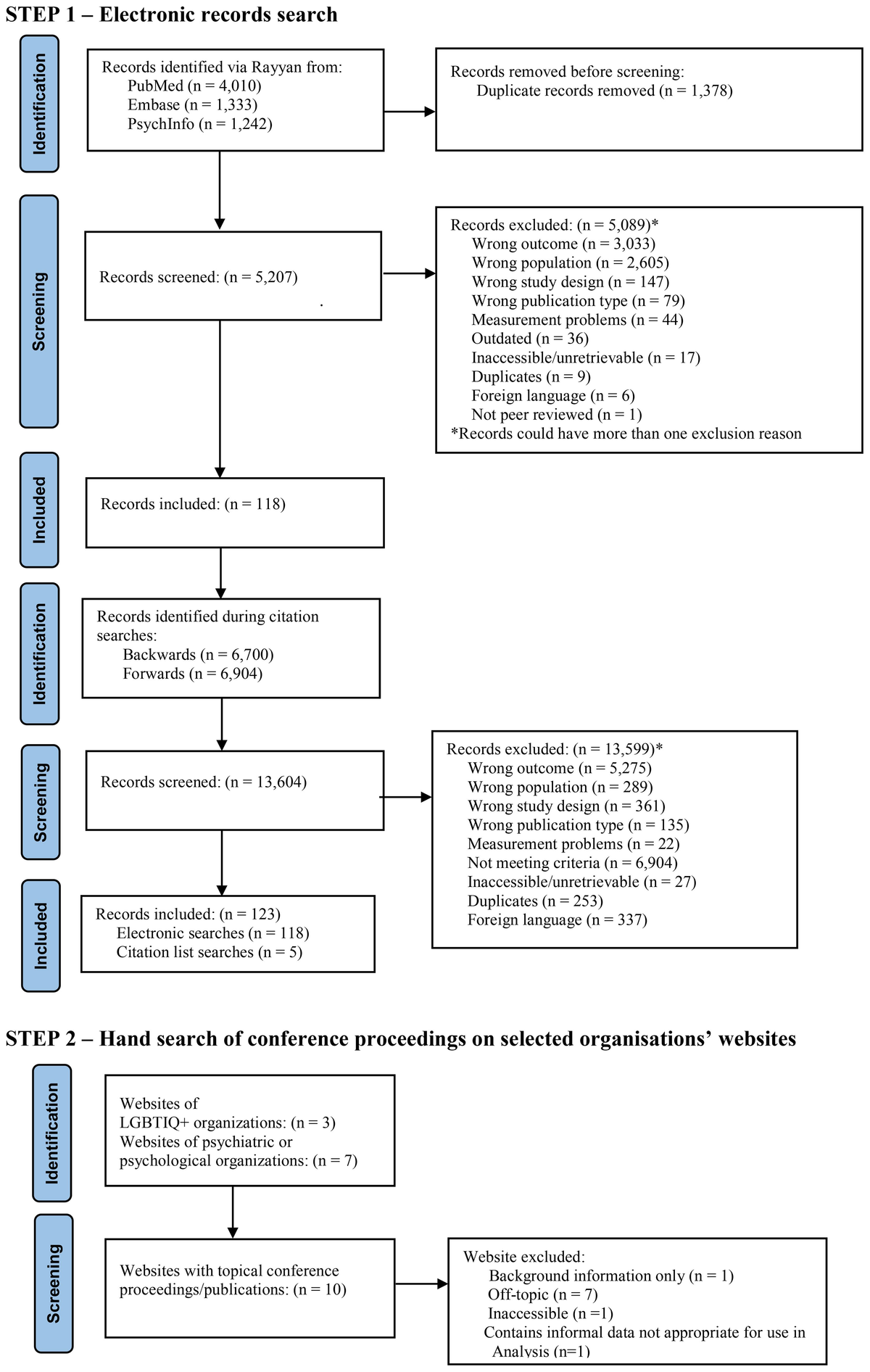
Member discussion